Where to start
Most hearing loss in adults builds slowly, over years of noise, age and general health, and most of what protects hearing is ordinary: turning the volume down, wearing earplugs at loud events, not smoking, keeping blood pressure and blood sugar in range, and getting your hearing tested before problems pile up. The National Institute on Deafness and Other Communication Disorders estimates that noise alone has damaged the hearing of millions of American adults, and much of that damage was avoidable.
If you are new here, these three guides cover the basics:
- Natural ways to improve your hearing: the everyday habits with research behind them.
- Natural treatments for hearing loss: what herbs, vitamins and supplements can and can't do.
- How to prepare for a hearing test: what happens at the appointment and how to read the results.
Symptoms that need a doctor first
Some hearing changes can't wait for home remedies. Hearing that drops suddenly in one ear, over hours or a few days, is treated as an urgent problem because steroid treatment works best when it starts early; our guide to sudden hearing loss explains the warning signs. Ringing in one ear only, a whooshing sound that keeps time with your heartbeat, ear pain with discharge, or dizziness with hearing loss also deserve a prompt visit.
A blocked, muffled feeling in one ear is often something simple like earwax or fluid behind the eardrum. Our guide to muffled hearing in one ear walks through the common causes and which ones you can safely deal with at home.
Understanding the type of hearing loss
Hearing loss comes in two broad kinds, and the difference decides what can help. Conductive loss means sound isn't getting through the outer or middle ear, from earwax, fluid or a problem with the tiny bones; much of it can be treated. Sensorineural loss means damage to the inner ear or the hearing nerve, usually from age or noise; it is permanent, but hearing aids and good habits make a big difference. The American Speech-Language-Hearing Association has a clear overview.
We cover both in more depth in conductive hearing loss and its treatments and high-frequency hearing loss, the most common pattern of age- and noise-related loss.
Tinnitus
About one in ten American adults hears ringing, buzzing or hissing that has no outside source. Our notes on what causes tinnitus, caffeine and tinnitus and ginseng for tinnitus go through the research in plain language, and hearing loss and memory covers the link between untreated hearing loss and cognitive decline.
Supplements, reviewed carefully
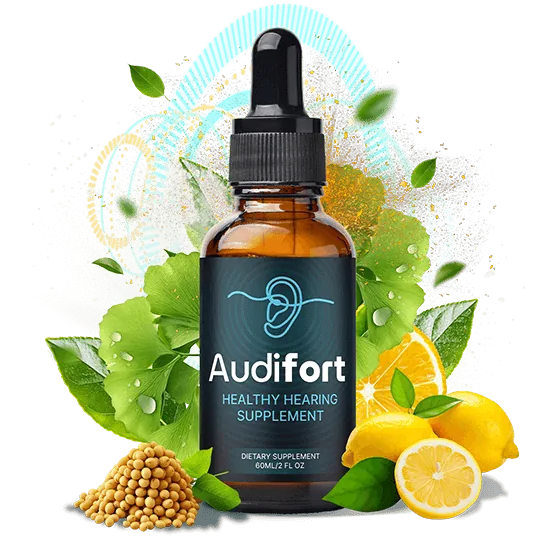
Hearing supplements are sold hard online, usually with big promises. We read the labels, look up the studies on each ingredient and check the refund terms before anyone has to use them. Our first in-depth review covers Audifort, a liquid hearing-support formula with ginseng, grape seed, GABA and a long 90-day refund window. Supplements are never a substitute for a hearing test or hearing aids, and the World Health Organization's hearing fact sheet is a good reminder of how much simple protection and early testing can do.